GETTING STARTED
To begin, I'll prompt the students to think about what a "hero" is and what kinds of characteristics a person like that might have. Specifically, I'll ask them to think about more "human" heroes: the ones with faults, with human characteristics and problems, or ones who don't always live up to the "heroic ideal." (We can also discuss the idea of the "heroic ideal" versus the "heroic reality," maybe talking about differences between real-life heroes and fictional heroes.
In his prose introduction to the 1855 edition of "Leaves of Grass," Walt Whitman says:
Faith is the antiseptic of the soul . . . it pervades the common people and preserves them . . . they never give up believing and expecting and trusting. There is that indescribable freshness and unconsciousness about an illiterate person that humbles and mocks the power of the noblest expressive genius.
Take a moment to think about this quotation and what it means.
Next, consider the following lines from "Leaves of Grass":
Do you see any relations between these two pieces of writing? What are they?
I understand the large hearts of heroes,
The courage of present times and all times;
How the skipper saw the crowded and rudderless wreck of the steamship, and death
chasing it up and down the storm,
How he knuckled tight and gave not back one inch, and was faithful of days and
faithful of nights,
And chalked in large letters on a board, Be of good cheer, We will not desert you;
How he saved the drifting company at last,
How the lank loose-gowned women looked when boated from the side of their
prepared graves,
How the silent old-faced infants, and the lifted sick, and the sharp-lipped unshaved
men;
All this I swallow and it tastes good . . . . I like it well, and it becomes mine,
I am the man . . . . I suffered . . . . I was there.
Some questions too guide your reading of the passage:
- Look at the word "large." It appears twice. What can you say about where it occurs, and what those occurrences might mean?
- What kinds of women do you picture in "[gowns]"? What kind of man do you picture the skipper to be? How do those pictures contrast?
- What other kinds of people are in the passage? What do you think their social class standing is? Does that matter?
- Who is "death chasing"? Does he pay attention to it? What kind of message does that communicate?
- What could "faithful of days and faithful of nights" mean?
- Whose graves are "prepared"? Are they used, in the end, or not? Why?
_____________________________
SMALL GROUPS
Get into small groups (of 2 or 3 people) and discuss your thoughts on the above. Then consider each of the following questions with your group as it relates to the lines above:
- What do these lines and this scene say about the rest of the poem and about Whitman's overall project with "Leaves of Grass" in 1855? (This is a big question, so don't worry if you can't answer it right away)
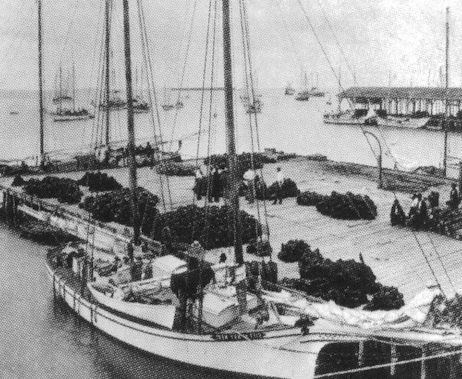
- What does "skipper" mean? Look it up in the OED. How might a "skipper" differ from a steamboat captain? Think about the role of technology, what that technology says about class and social standing, and the social "worth" of the people in the scene, and what does it mean for the "skipper" to be heroic? Are there differences between the steamboat and the skipper's boat? What about the skipper and the people he rescues? Why do those differences matter? In your answers consider these pictures of what the steamboat and what the skipper's boat might have looked like. Also consider the picture of the steamboat explosion so you can get a better visual picture of the scope of the disaster the skipper would be facing. (In this question, it might help to think about the what you picture when you picture a "hero." Do you picture someone like Superman, or someone like a San Francisco policeman? Or even a security guard? Do you think the steamboat is more like Superman, or more like a policeman? Why? Why is it significant that the small, perhaps inferior, boat is the "hero" of the large, technlogically advance and possibly superior boat?)
- How does the skipper compare to our definitions of "hero" that we discussed earlier? Is the skipper the "heroic ideal" or something else? Why is that important? Would you expect him to be an ideal or something else? Which do you prefer?
- Think about the role of technology, what that technology says about class and social standing, and the social "worth" of the people in the scene?
________________________________
LARGE GROUP
We will reconvene and, and each group will discuss what they talked about. The goal of this section is to make sure each of the groups is "on track" with the assignment in noticing that the "skipper" is an unlikely hero and that his task of saving the entire steamship company is HUGE.
The discussion should be led such that the students understand that Whitman is uniting concepts of high and low. I will steer toward a discussion of class, ability, and literacy.
Questions to consider in this segment:
We will reconvene and, and each group will discuss what they talked about. The goal of this section is to make sure each of the groups is "on track" with the assignment in noticing that the "skipper" is an unlikely hero and that his task of saving the entire steamship company is HUGE.
The discussion should be led such that the students understand that Whitman is uniting concepts of high and low. I will steer toward a discussion of class, ability, and literacy.
Questions to consider in this segment:
- What are the stakes of this scene?
- Where might some of the same ideas reappear?
- Why does it matter that the skipper is a skipper?
- Why does it matter that the skipper WRITES a message to these people?
_________________________________
WRITTEN ASSIGNMENT
WRITTEN ASSIGNMENT
There are two parts to the written assignment, and each part should be approximately 1 page in length AT LEAST. These are not formal essays. The goal here is for students to articulate their thoughts in a way that is meaningful to them. They should address the questions without considerations of thesis statements or formal essay structure.
- PART ONE: The first task is to simply talk about your impressions from both the small group and large group conversations. Be sure to include SPECIFIC EXAMPLES from the poem, the pictures, and the other things you looked at. Try to answer as many of the questions detailed in the "SMALL GROUP" section as you can.
- PART TWO: The second task is to repeat the process. Find a scene, line, or detail in the poem that exemplifies the idea of bringing together the high and the low. Think about questions of class, size, stature, literacy, and prejudicial expectations that we discussed. It might help to try to picture the things in the poem actually happening and think about what these people might have actually been like in their interactions. Does the way Whitman describes the interaction mesh with how you think things "should" be? Is there anything counter-intuitive about it? Think about the same kinds of questions we answered for the scene with the skipper, but apply them to the scene or detail you choose. HINT: Think about your images of heroes like Superman compared to your images of more everyday heroes like policemen (and of course, about the images of the steamboat and the aristocrats and the images of the small fishing boat and the skipper). You might also think about the story of David and Goliath for more guidance (if you don't know that story, or aren't sure how it might apply here, see me). Look for both of these, and examine the ways the two things interact with one another.
___________________________________
WHAT'S GOING ON IN THE BACKGROUND?
WHAT'S GOING ON IN THE BACKGROUND?
The main question students are answering is:
The overall goals of the assignment are:
The secondary, background goals of the assignment is:
The proof they "got it" will be:
NOTES ON THIS REVISED ASSIGNMENT:
What kinds of things does Whitman do within the poem to level (or invert) concepts of high and low?
The overall goals of the assignment are:
Students will gain an understanding of Whitman's push to level (or invert, at times) conceptualizations of high and low (in terms of class and social standing) and challenge our ideas of what certain people are capable of accomplishing. Students should be able to relate the implied prejudgments of his readers (i.e. that as a "lesser" man, the skipper is an unlikely hero) to their own prejudgments in their own lives, thereby understanding what Whitman was challenging his readers to do. Students should start to grasp that Whitman's poem does other things to challenge people's concepts of what is "worthy" and "noble" in terms of form as well as content.
The secondary, background goals of the assignment is:
Students should begin to understand that one small piece of a poem or work of literature relates in many different ways to the whole poem, and that the writer's overall strategy manifests itself in multiple ways throughout the poem.
Students should be starting to develop skills in reading passages and relating things they see in those passages to greater works. We're working on observation over analysis, but hopefully some simple analysis would organically flow from this project in future discussions.
The proof they "got it" will be:
The first part of the assignment is designed to give them a grasp on how something like this works. My questions are (hopefully) specific enough to guide them directly to where I want them to get (that is, answering that main question about the high and the low). If it does, then they should be able to recognize the skipper scene as an example of something that inverts conceptualizations of the "heroic" (in which the "inferior" comes to the rescue of the "superior"). If the assignment is effective, they will be able to produce their own example "skipper scene" in the second part of the question.
I added some to the introductory discussion to try to engage the students' conceptions of what is a "hero" and get them to think about contrasting images of the heroic (and hopefully that the "heroic ideal" is different from the "heroic reality." I'm hoping that comparing images they have in their heads of someone like Superman will contrast to someone like an everyday policeman, and they can then hopefully relate the steamboat to Superman and the skipper to the everyday policeman, and maybe see that the "Skipper Scene" would be analogous to something like the policeman saving Superman from near-death).
I also added some guiding questions about the passage to get the students started on "reading" it with an interpretive bent.
Finally, I added some questions to the last part, and a hint to Part Two of the written assignment to guide their thinking along those lines further.